
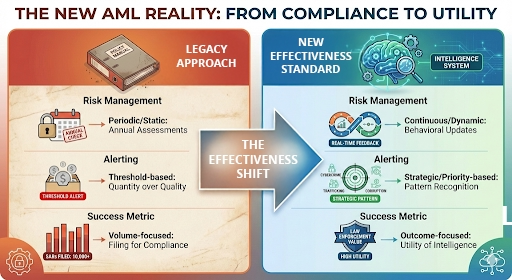
The regulatory landscape for Anti-Money Laundering (AML) is undergoing a fundamental shift. The “transition period” for the implementation of the U.S. AML Act of 2020 Effectiveness Rule marks the end of the “Check-the-Box” era.
When this shift fully matures, federal examiners will no longer ask if you have a manual; they will ask if your system actually catches criminals. For Compliance Officers and Board Members, the key to navigating this new enforcement climate is positioning your program now to meet the evolving intent of the law.
What You Need to Know: The Utility Mandate
The core of the FinCEN directive is Section 6101, which mandates that AML/CFT programs be “effective, risk-based, and reasonably designed.”
In plain English: Utility is the new Compliance. Regulators are now measuring the quality and “law enforcement value” of your Suspicious Activity Reports (SARs). A program that generates thousands of low-value alerts but misses patterns related to the 8 National Priorities is now considered an elevated regulatory risk.
Practical Steps: How to Align Your Bank
To align with the intent of the regulation, banks should begin pivoting internal controls toward two major themes: Dynamic Risk Modeling and Strategic Priority Detection.
1. Transition to Dynamic Risk Assessment (DRA)
The tradition of the “Annual Risk Assessment” is no longer sufficient to meet the “reasonably designed” standard.
- The Goal: Move toward a system where customer risk profiles are updated automatically based on real-time behavior.
- Practical Step: Implement triggers that re-evaluate a customer’s risk score the moment their transactional activity deviates from an established “Normalcy Baseline” or when new national threats are identified.
2. Prioritize the 8 National Threats
Your detection logic must be explicitly mapped to the eight priorities established by FinCEN. This isn’t just about threshold monitoring; it’s about Pattern Recognition.
- The Focus: Ensure your investigators are looking for specific illicit finance patterns—such as the layering tactics used by Transnational Criminal Organizations (TCOs) or the specific “mule” behaviors associated with Human Trafficking.
- Efficiency Tip: By aligning detection logic with these specific threats, you can reduce “noise” (false positives) and focus human capital on high-impact investigations.
Meeting the Intent: Why Act Now?
- While the exact timeline for full enforcement continues to evolve, taking steps today ensures your bank is future-proofed.
- The Immediate Next Step: Ensure your Board of Directors has reviewed and approved an updated AML program that explicitly incorporates the 8 National Priorities.
- On-going: Expect examiners to request “Proof of Effectiveness” during the next exam cycle—specifically asking how your risk assessment directly informs your monitoring rules.
What If You’re Not Fully Ready?
If your bank is still relying on static legacy systems, the key is transparency and a roadmap.
- Self-Identify the Gaps: Document where your current controls lack the agility to address dynamic risks.
- Prioritize Quality Over Quantity: In the interim, focus manual investigative resources on the 8 National Priorities to show you are aligned with the intent of the law.
- Formalize an Upgrade Path: Regulators are generally more supportive of banks that have a clear, documented plan to transition toward improved detection and dynamic control capabilities.
Summary: The New Standard
| Focus Area | Legacy Approach | 2026 Effectiveness Standard |
|---|---|---|
| Risk Management | Periodic/Static | Continuous/Dynamic |
| Alerting | Threshold-based | Strategic/Priority-based |
| Success Metric | Number of SARs filed | Utility of intelligence provided |
The goal is simple: Build a program that isn’t just compliant on paper, but effective in practice.
Is Your AML Program “Effective” or Just “Compliant”?
The era of static risk assessments is over. Sign up for a Complimentary 2026 Threat Risk Assessment. Our experts will help you map your current controls against the Effectiveness Utility Mandate and provide a high-level roadmap to transition from threshold-based alerting to strategic pattern recognition.
Discover more from Section2
Subscribe to get the latest posts sent to your email.
